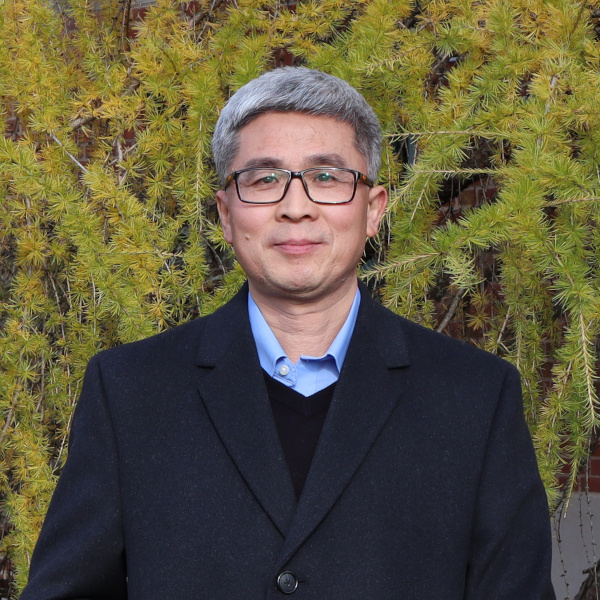
Huanzhong Wang
Professor of Plant Molecular Biology
Professional Credentials
- PhD, Molecular Genetics, 2006, Chinese Academy of Science, Beijing, China
- MS, Crop Physiology, 1998, Agricultural University of Hebei, Baoding, China
- BS, Crop Science, 1995, Agricultural University of Hebei, Baoding, China
Areas of Interest
- Plant Molecular Biology
- Vascular Development
- Secondary Growth
Research Projects/Interests
Plant vascular tissues play essential roles in plant growth and development and allow plant species to adapt to various environments since they evolved 450 Mya. The long-term goal of my research is to elucidate the molecular mechanisms regulating plant vascular development and xylem differentiation.
Vascular cambium activity: Vascular tissues consist of xylem, phloem, and intervening procambium/cambium. Cambial cells produce progeny that either maintain their stem cell properties or differentiate into xylem and phloem. We have identified regulatory pathways and transcription factors (TFs) in vascular patterning and stem cell maintenance. This project provides new insights into plant stem cell biology.
Cell wall development: Xylem tissues develop secondary cell walls (SCWs) that form the majority of terrestrial biomass. We study the coordinated biosynthesis of three cell wall components, e.g., cellulose, hemicelluloses, and lignin. We have elucidated the functions of microRNAs, class III HD-ZIP TFs, NAC and WRKY domain TFs in SCW development.
Vascular reestablishment in tomato grafting: Grafting is the practice of joining a desirable fruit-producing top (scion) of one plant to the robust root system (rootstock) of another. Grafted plants take advantage of both the scion and rootstock to achieve enhanced vigor, yield, and resistance to soil-borne diseases. We have established effective tomato grafting methods, and expect to identify genes and pathways important for graft healing and vascular reconnection.
Currently accepting graduate students.
Courses
- SPSS 3210: Molecular Laboratory Technology (3 credits). Fall 2012-present, even years
- SPSS 3230: Biotechnology – Science, Application, Impact, Perception (3 credits). Fall 2011-2017, Fall 2018-present, odd years
- SPSS 4210: Plant Physiology: How Plants Work (3 credits). Spring 2017-present
| huanzhong.wang@uconn.edu | |
| Phone | 860-486-4443 |
| Alternate Phone | Lab: 860-486-6751 |
| Fax | 860-486-0682 |
| Mailing Address | Agricultural Biotechnology Laboratory 1390 Storrs Rd., Unit 4163 Storrs, CT 06269-4067 |
| Office Location | Agricultural Biotechnology Laboratory (ABL) 302D |
| Link | https://scholar.google.com/citations?hl=en&user=CA5RiOUAAAAJ&view_op=list_works&sortby=pubdate |