Landscape Architecture Digital fabrication, simulation, and visualization labs
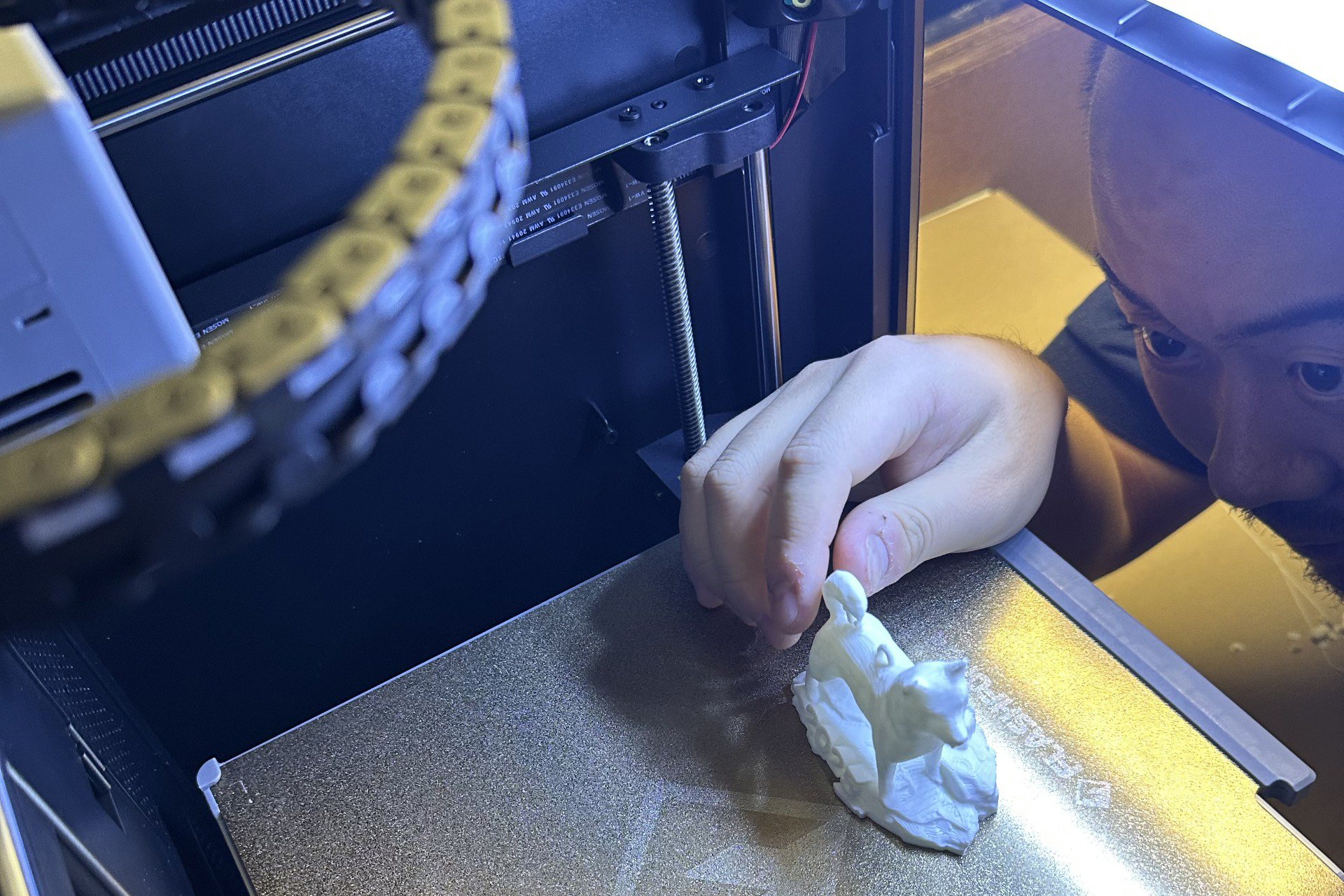
Three interconnected laboratory spaces provide students with the opportunity to engage with cutting-edge digital technologies. The LandFAB fabrication space provides access to laser cutters, 3D printers, CNC routers, and other advanced manufacturing tools. The Virtual Reality Lab allows students to experience their designs through immersive 3D models and spatial simulations. The Remote Sensing and Simulation Lab provides access to a drone library for aerial survey and photogrammetry, along with computational tools for environmental modeling, GIS analysis, and climate simulation.
Key Infrastructure
- 12 high-powered rendering workstations
- Epilog 12”x24” laser cutter
- a 16”x16”x4” CNC
- a Formlabs Resin 3D Printer
- 3X PLA 3D printers
- PLA pens
- a 36” Vinyl Cutter
- a 48” Material Cutter
- 48” Large Format Printer
- Color Laser Printer
- Foam Cutter
- 2X Flatbed Scanners
- 48” material cutter
- 48” Paper cutter
- 6X Oculus VR Headsets
- Drone Library (DJI Mavic 3 Thermal Drone + DJI Air 3 Drones)
- Matterport 3D Scanner
- 3X 4K Projectors
- 2X 80” OLED TVs
Student Experience
Our three lab spaces are integral to the design process, with students utilizing them throughout the semester at various stages of their work—from initial explorations to final presentations. The labs operate together to support integrated digital workflows and introduce undergraduate students to cutting-edge research and design technologies.
- LandFAB : The only digital fabrication lab dedicated to undergraduate landscape architecture students in the country, with laser cutters, 3D printers, and CNC routers
- Virtual Reality Lab: Experience designs through immersive 3D models and spatial simulations
- Drone Library: Access to drones for aerial survey, site documentation, and photogrammetry
- Remote Sensing & Simulation: Computational tools for environmental modeling, GIS analysis, and climate simulation
Extension Community Engagement
The labs facilitate the construction of prototypes, community-oriented traveling exhibitions, and new approaches to making landscape designs and environmental issues accessible to wide audiences. Students develop professional presentation skills and public communication strategies while creating work that extends beyond the university. These spaces support collaborative projects with community partners, enabling students to translate complex design and environmental concepts into engaging, tangible formats that foster public dialogue and understanding.